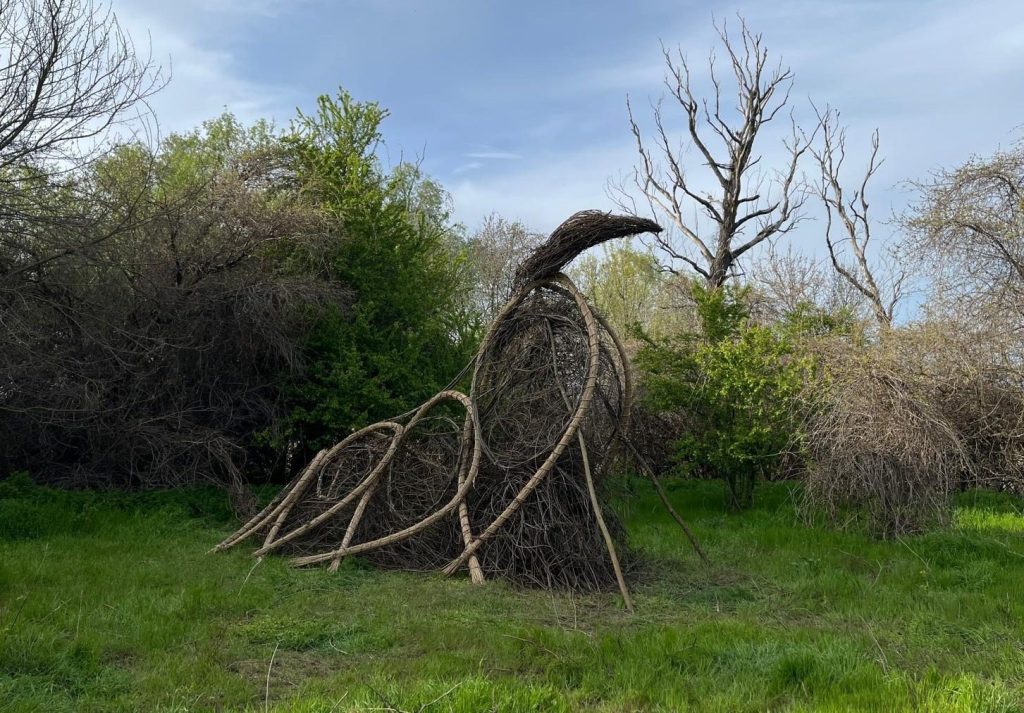
Permanent Installation for Muzeul Ivan Patzaichin (Romania)
Reed (Phragmites Australis), Willow (Salix Sp.), Vine (Vitis sp.)

It began as an idea rooted in the mythological spirit of the Dunărea and the cocoon-like, vine-draped vegetation of the site we were given. It was a dream about an installation which would convey a feeling of the fantastical, but in its essence speak for the land of the Danube Delta where it would be situated and to the people kayaking the local waters who would come to this place to seek inspiration, enjoyment, or a moment of quiet reflection.
We gathered our materials from the Delta itself: reed, willow, and vines. Bamboo, which served as the framework for the structure, was the only material that didn’t come directly from the Delta, but it was a material I was familiar with and loved for its lightweight nature, durability, and ability to withstand changing environmental factors. Even as we began the build, we felt as though the installation had already started to take on an energy of its own. “Like a cat,” she said, as she smiled gently and wrapped her arms around the stacks of woven reed arches and braided willow circles. “Like a bird, or an insect waiting to take flight,” I thought, as I imagined how the living vines we would braid into the structure would gradually reclaim the natural materials again, back into the land they came from.
We incorporated aspects of a technique shown to us by a local woman, inserting a willow heart into each reed element for strength and flexibility. We began to imagine how the installation might be able to spark conversations around ecotourism and the importance of protecting this fragile environment. It wasn’t just about creating something beautiful, it was about connecting people to this place, about inviting them to see the Danube Delta and the materials around them through a different lens. The hope was that in sharing its beauty, we could inspire a deeper understanding and respect for the land.
Working with natural materials is a beautiful process. There is a sense that the materials are a part of the land itself and you are, in a way, invited to collaborate with them rather than control them. When you gather the materials, there is no factory precision; they are imperfect, uneven, each piece different from the last. The reed might bend in unexpected directions, the willow branches may twist with a mind of their own. But this is what makes working with these materials so humbling. They are not preprocessed, not cut to precision using electric machinery, but living elements of the earth, each one with its own intention.
The challenge lies in finding balance. How much can you manipulate the material? Can you bend the reed to the shape you have in mind or will it snap if you force it too far? Will the willow branch lose its strength if shaped in a way that goes against its natural form? At some point, the materials resist. But there is a quiet power in human hands, the ability to guide, to coax, and to arrange. You learn the subtle art of listening to the materials, of knowing when to push, and when to step back. There is a kind of grace in this exchange. The materials become something more than they were. And yet, as much as they are shaped, they retain a sense of their own nature. Structures built with natural materials may stand as a testament to an artists skill, but they will also remind you of how little you can truly control when building with materials that are alive in their own right.
Two days before the end of the build, late afternoon. We had been working on the elements for the installation for a week in the courtyard of the museum, and were finally ready to start installing. We were excited to start, but anxious about the process because there were so many unknowns. Our site was half an hour from the museum by boat, and the elements would therefore need to be transported also via water, balanced carefully over the gunwale of a speeding boat that would wind its way through the reed and tree lined channels of the Delta. Once on-site, we would assemble the pieces onto a spine-like back column and lift up the entire column to set onto the bamboo support structure, with only one tall ladder. All of this would need to be done strongly and quickly, but with enough precise control to ensure that the elements wouldn’t break.
The day passed quickly, a roller coaster of emotions that ended on the highest of notes. Everything had worked as we had hoped! There was a perfect moment when we stepped back and saw the evening light fall over the towering structure we had just lifted —a moment of celebration and the gratifying thought of spending the last two days with a golden pace, a leisurely day finishing the rest of the structural notes, the last day working out final details and flourishes.
But when we returned the next morning, the scene before us was almost unrecognisable. All of the bamboo supports and bracing which were essential to the structure’s stability had been taken. Someone had cut all the ropes securing the bamboo and left them littered on the ground around the structure. The woven reed arches had collapsed to the ground and sagged under their own weight. The bamboo had been entirely removed, even dug up from where we had buried the supporting pieces half a meter in the ground, as though someone had taken the time to disassemble it with purpose.
The practical consequences were significant. We had to quickly figure out another solution for the supporting structure, and any amount of passing time would mean continued strain on the already strained and breaking reed elements. The delay also meant that we would barely be able to complete the work before the deadline, rather than being able to deliver the project the way we had wanted to. We started to work to recover the elements that had broken and replace the supports that had been taken, but what had happened lingered in the back of our minds, and the air felt heavy and strange. There was loss of trust, a sense of violation, and above all a huge feeling of confusion. Was it a rejection of our attempt to bring attention to the Delta? Or was it something less personal, more deeply rooted in a complex relationship between the locals and the outside world? We had come here with the best of intentions, to work with the land, to learn the people and their heritage, and to help open a dialogue about sustainable tourism. But this act felt like a rejection of all of these ideas, a statement that we weren’t welcome, that outsiders—no matter their intentions—would never have a place among the local community.
As we tried to recover and keep moving forward, something beautiful happened: a community around us came together to show their support in a huge and meaningful way. A team of Romanian and Roma builders who had just finished another job for the museum, a French student who was in the area doing research for his master’s thesis — these individuals volunteered their time and energy for us, to help us recover what we had lost and realise our vision for the piece. There was something so deeply moving about this gesture, and the experience reminded us that true community bridges all types of diversity, and is built not only in moments of joy and celebration but especially in times of loss and challenge.
In the end, we completed the installation on time with the strong support of our friends. It wasn’t as pristine as it could have been, but in a way, the process felt more real. We had come to create a piece of art inspired by fantasy and mythology, but we were reminded that for all its serene beauty— the sunsets and sunrises over misty waters, the flocks of migratory birds and other wetland wildlife inhabiting its ancient waterways— the Danube Delta is not a place that easily accepts outside influence. It is a place that lives by its own rhythms and its own rules, which have been shaped by centuries of isolation and self-reliance. For me, the experience of installation has evolved beyond just a focus on natural materials and sustainable tourism; it has become my own lesson in resilience in the face of challenges and how to accept complexity.
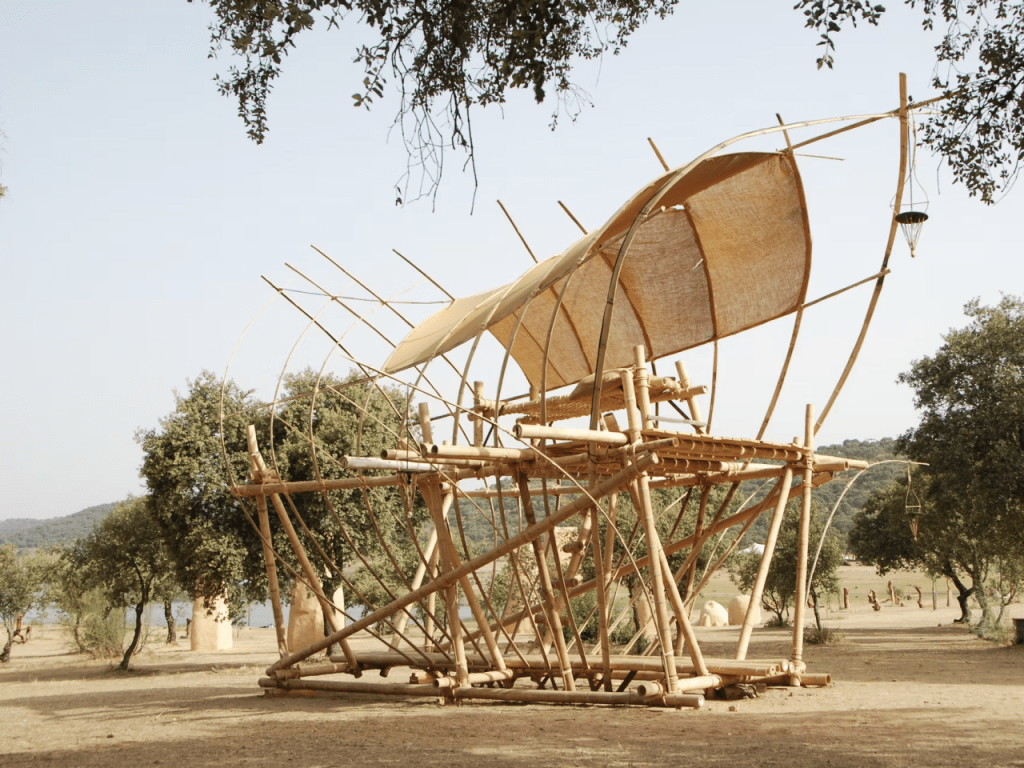

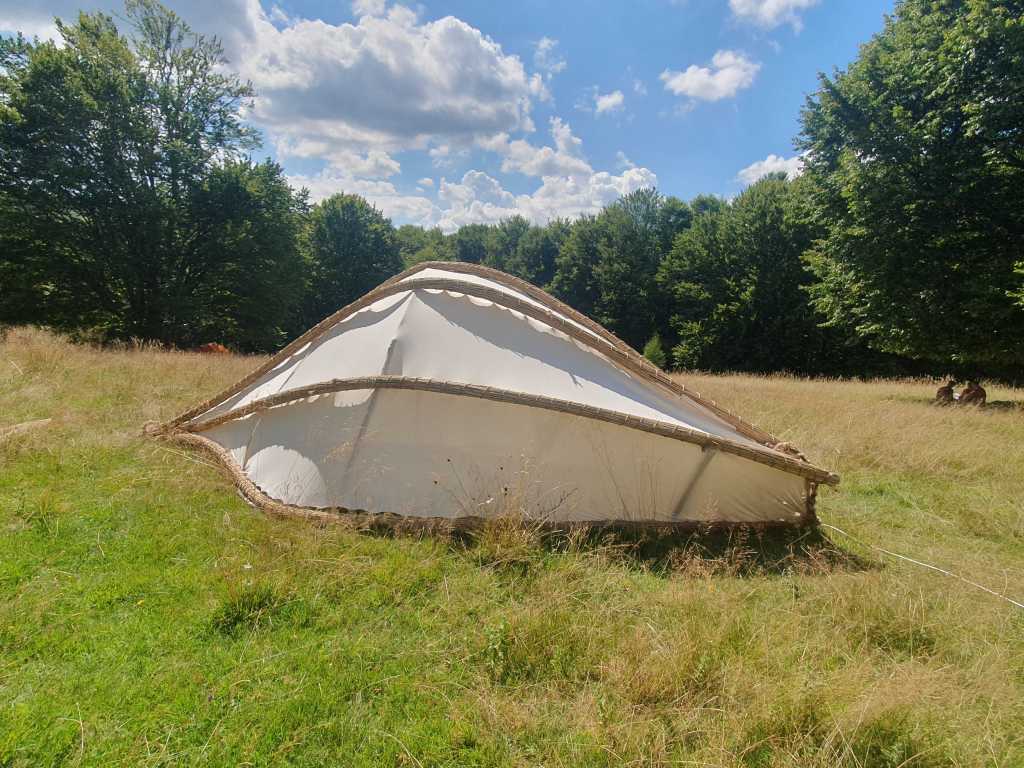
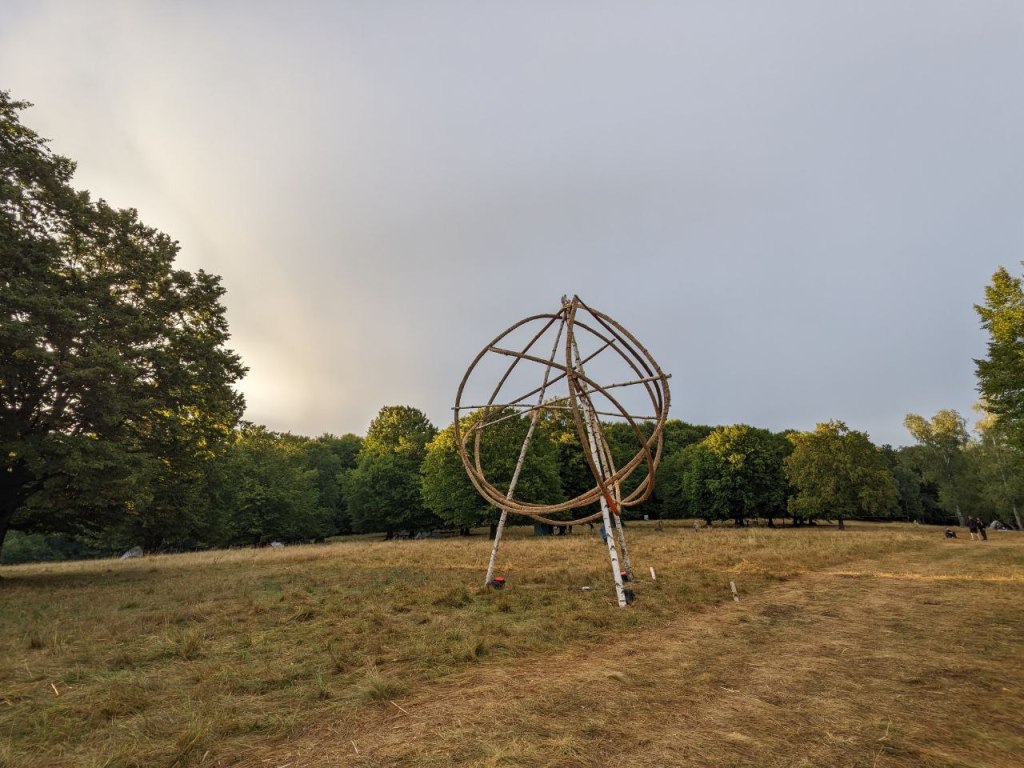
 Selected Installations