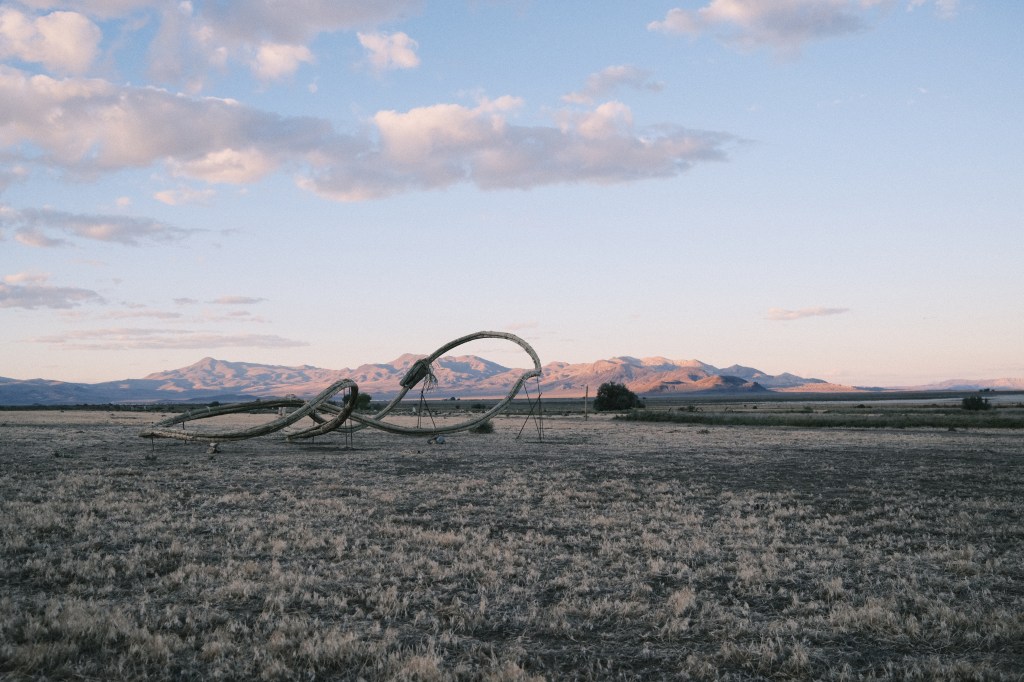
Permanent Installation for Fly Ranch in collaboration with Emi Watanabe
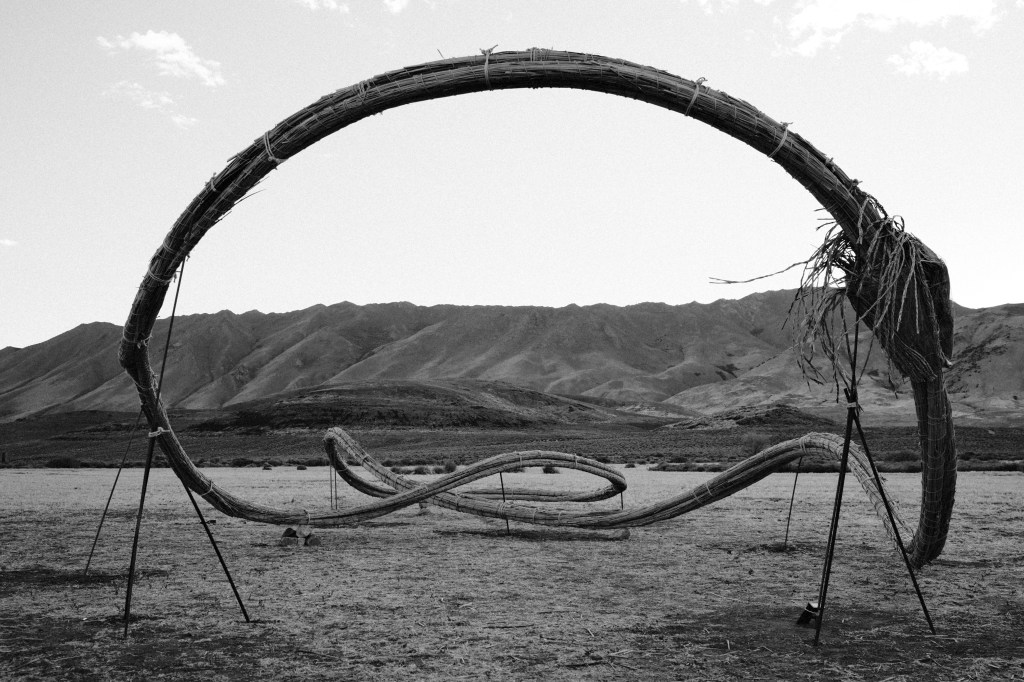
Tule grass, cattail, sisal
Living at Fly Ranch these past weeks was living life one day at a time. One sunrise at a time, one sunset. The first day we arrived, we went to the springs at twilight. I remember the way the light fell onto the orange glazing of the geyser itself, how the spray caught the wind and whipped into a kind of mist that shrouded the top of the geyser. I remember how the light slowly changed as the moon rose and the long, spattered arms of the Milky Way began to spread against the sky, against the backdrop of mountains. We looked into a night sky so deep that I felt a sense of vertigo, falling into the deep black spaces between the stars.
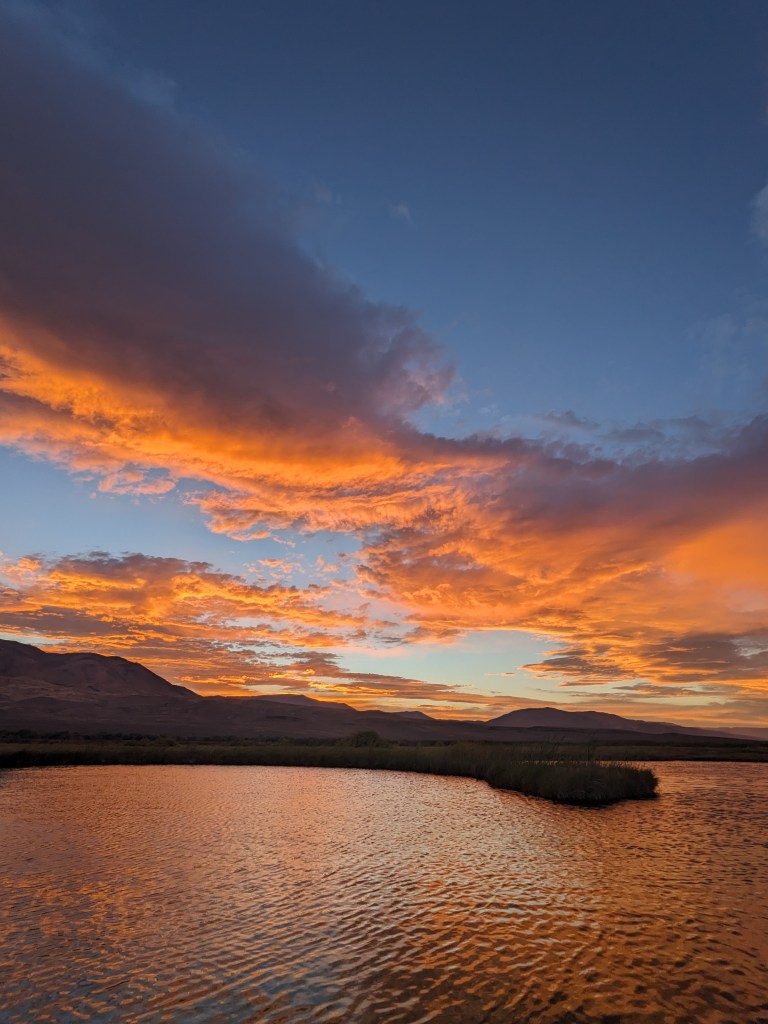
When I woke the next morning, the sunrise was streaking across the sky in all peach and lavender hues. From above me came the sounds of a black crow high up in the white, bony tree that loomed just a short distance from my tent, next to the seesaws. I would learn that he sat there every morning, around the same time, cawing. It was hard to tell whether this routine had started before we arrived or after, but every morning, like clockwork, I would see him. When he finished his morning calls, he would fly away again and I would know that it was time to start the day.
There is a small library in the front room of the Operations center, an archive of artifacts from Burning Man lore as well as books about the history of the place. Browsing through these documents, we learned about the history of this site: how the 1997 Burning Man led to visions of this place becoming a year-round site, a long-term home for the culture and community. Fly Ranch as the beginning, and as a vision of a Burning Man future.
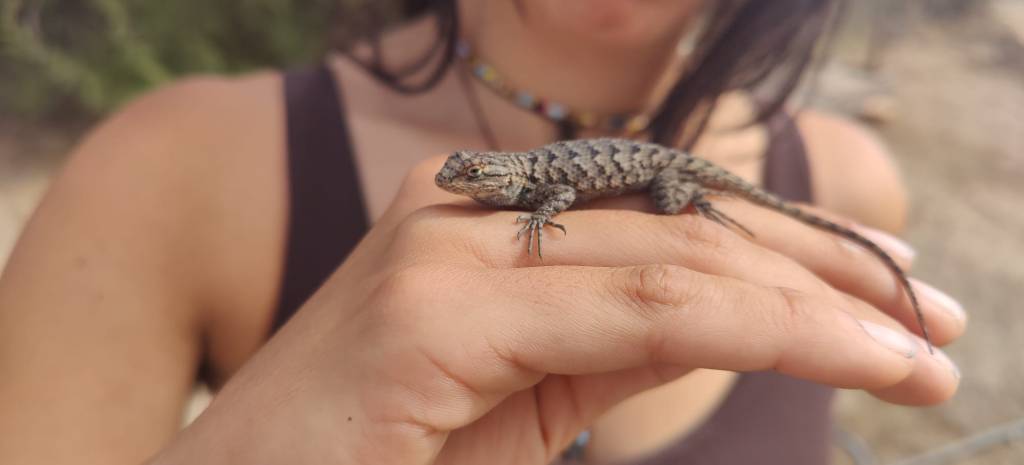
Unlike the alien moonscapes and dusty expanse of the playa, Fly Ranch has the energy of a place filled with desert life. There are the skittering marks left by lizards across the sand, the tangled webs of black widows in the darker corners, the darting blur of a kangaroo mouse that would come for our small peanut offerings. Blue herons stalk the marshy edges of the reservoir, and at times, the distant yipping of coyotes.
In addition to the native life, there are pockets of living things that the community behind Fly Ranch has cultivated. We would walk the spiral garden, grown from Burning Man compost, picking fresh herbs and bright yellow squash that were unbelievably large and sweet. Every morning and evening, the beautiful smell of damp earth burst into the air, as well water drawn from reservoirs deep under the earth flowed into the gardens. Bees came then, to drink their fill from the dripping taps before they returned to their hives hidden under a grove of trees further down the garden path. The people who tend to these lives became our friends, part of our community. We drew sweet, golden honey out of the combs and drank tea together. It felt fitting in this space to think about how our art installation would fit into this larger ecosystem, and important to reflect the mission of regenerative practices and land stewardship that Fly Ranch embodies.
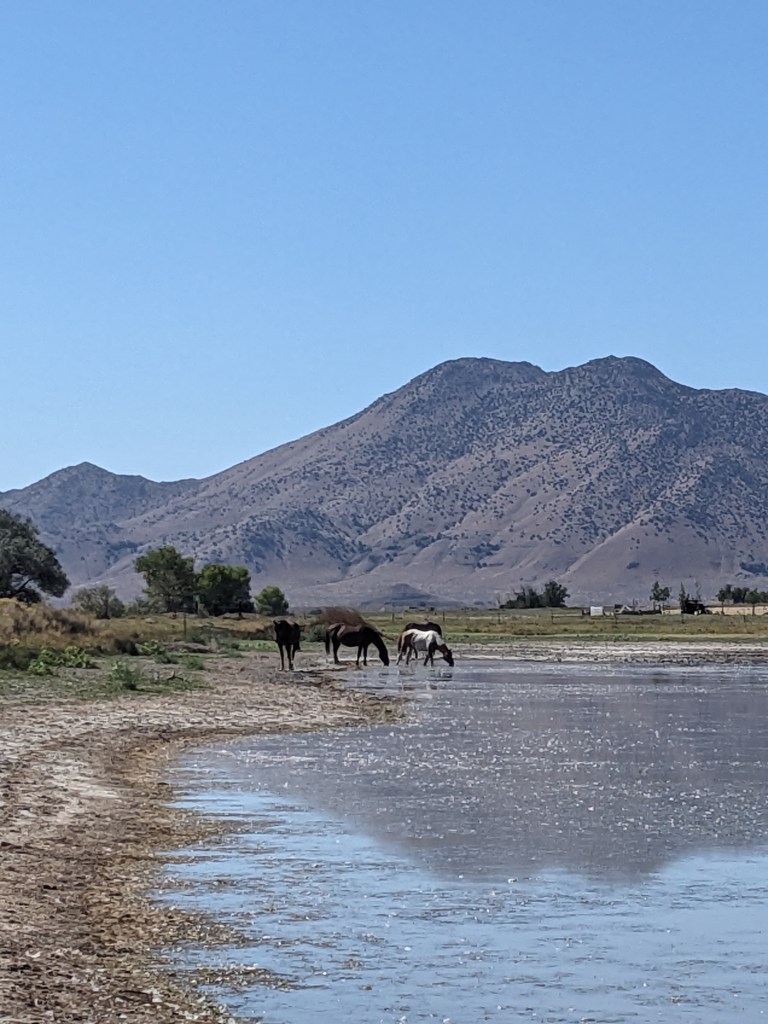
We harvested tule grass and cattails in the morning to avoid the afternoon sun, with just the birds of the reservoir and some small animal chittering in the depths of the rustling grass somewhere. One day, a pack of young wild horses came to investigate. The most fearless one came right up to us and stared down the vehicle. At that moment, everything was still and we were eye to eye with the nature around us.
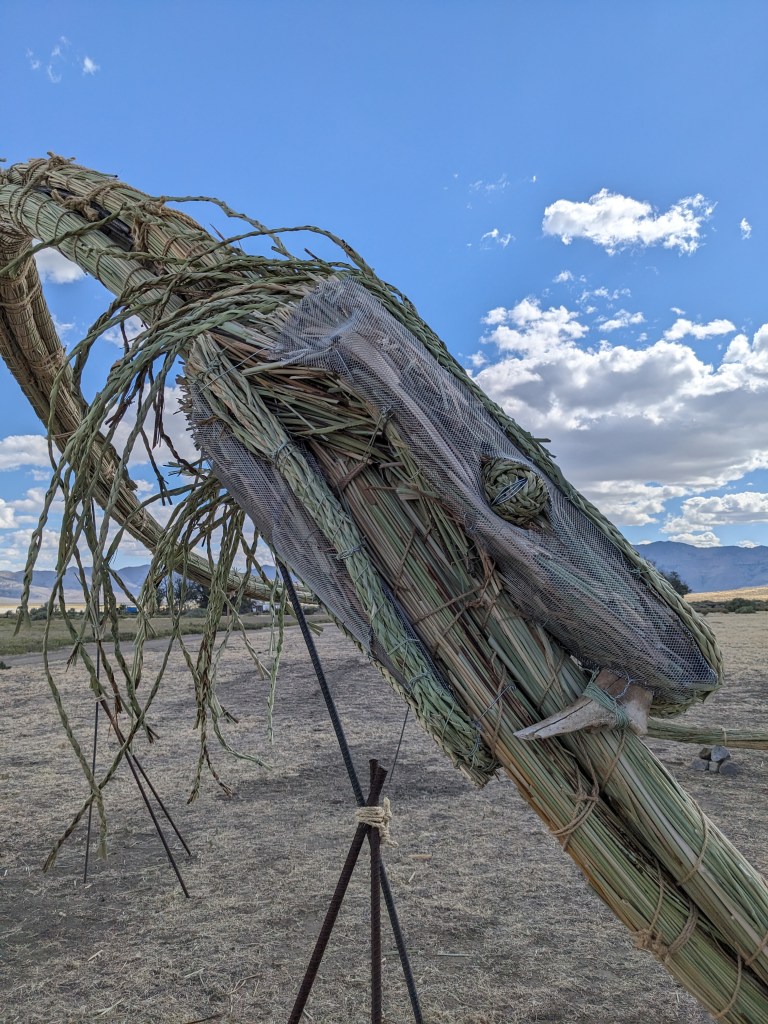
After we came back, we would lay the grasses out in thin layers to slowly cure. Freshly cut, the color palette was dark green, glossy, and smooth, fading in a bright yellow gradient towards the roots as they hit water level. The colors evolve over the course of days to a pale spring green, and from a distance each spiralled bundle looked almost inorganic, like celadon or some sort of opalescent metal.
Spirals upon spirals. It is almost impossible not to enter a kind of meditative state in the process of working with natural materials. The tule and cattail have their own voices. We took fistfuls of grass, so fragile and easily snapped, and wove them into something else. At the location where we harvested, we found the beginnings of weavings, remnants of other creators who had stopped there before us. There is a feeling of bending the elements, listening to how they want to move, and how to push them to the point at which the materials want to stop.
If you hold a bundle calmly and evenly in your hands, you can feel the gaps in it, like little pockets of lesser resistance: an empty space of imbalance, more prone to breakage when bent. And so we fill them in, space by space. Working with natural materials is a lesson in seeing the diversity in each piece of material given to us by nature, and in creating as balanced a whole as possible, or in going along with the imbalances, to curve there or bend here. There is awareness in this space, or rather a practice of keeping yourself in a state of deep awareness while at the same time surrendering somewhat to the will of the material.
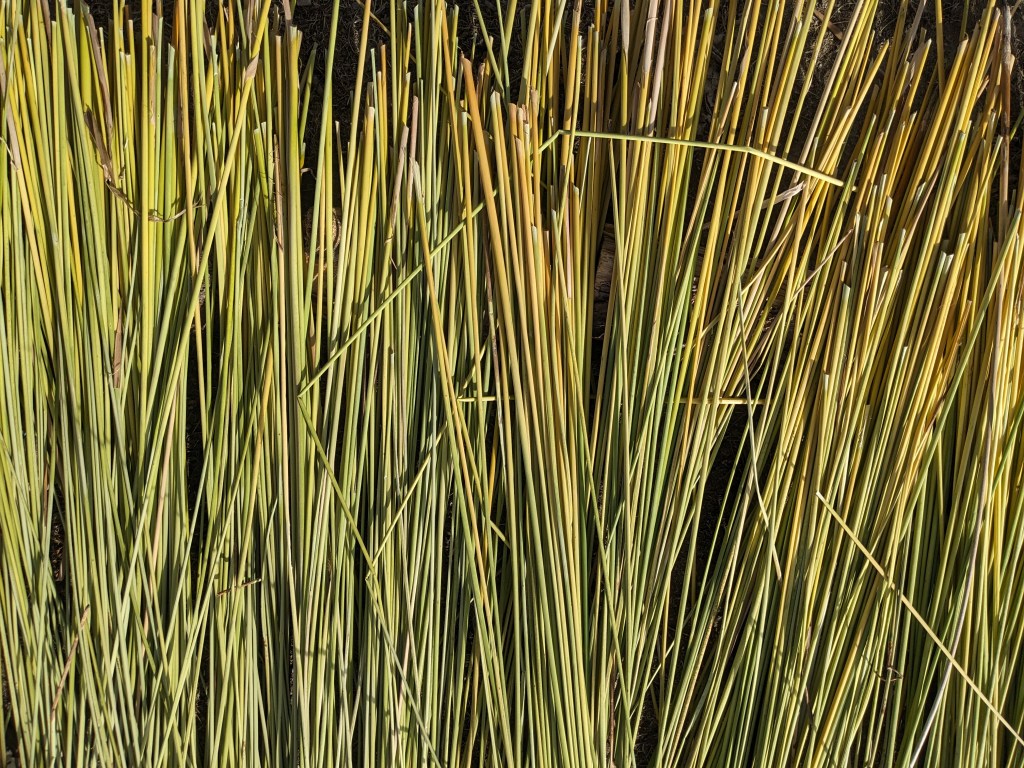
This was the environment of our process: no power tools, no generators, just the quiet sounds of the desert ecosystem all around us. Even before the harvest, Emi and I had talked for months across time zones about where we would be working and the particularities of tule grass and cattail. We studied the bundling of reeds from the Romanian river delta, techniques from Mediterranean river cane, and reed buildings from South America and Iraq. We visited the Pyramid Lake Museum and learned about the Paiute people and how they had worked with the tule and cattails. Speaking with the docent, we learned that one of his biggest worries was that tribal protections had been created by executive order, and so could just as easily be taken away. I kept thinking about how the land we were on has been stewarded by Numu and Newe people since long before we arrived, people who continue this work today, and about how easily and quickly a balance can be tipped, unmade.
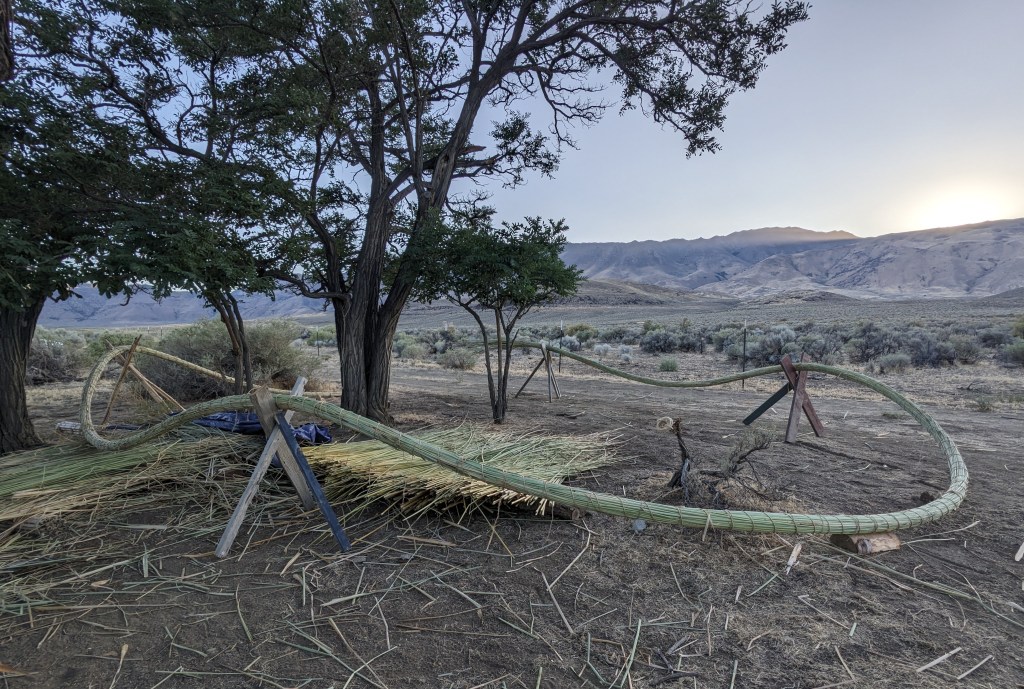
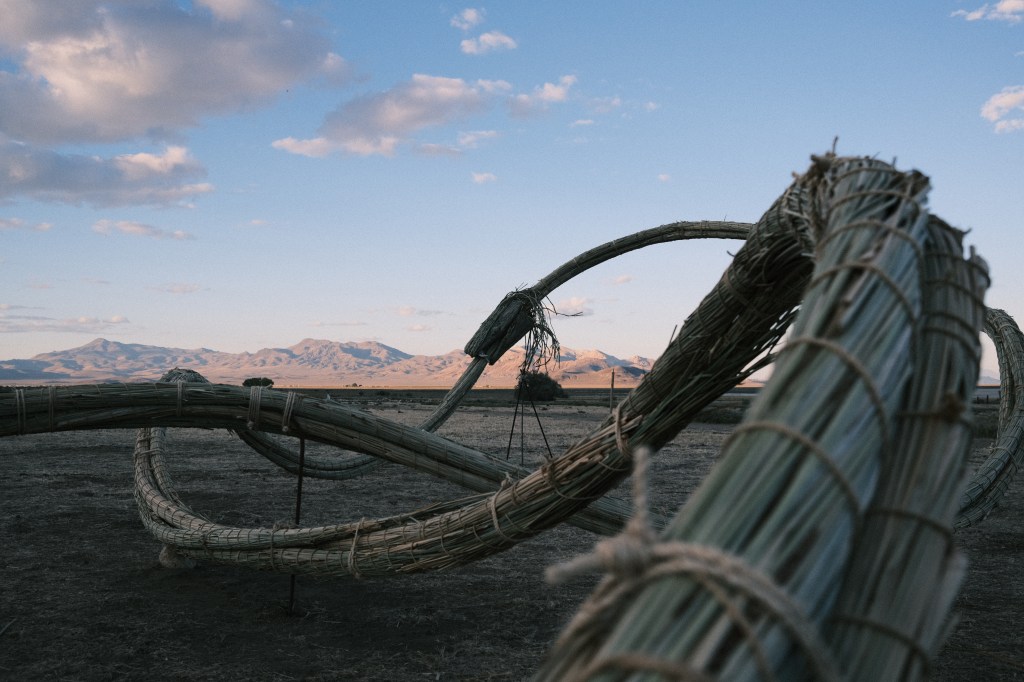
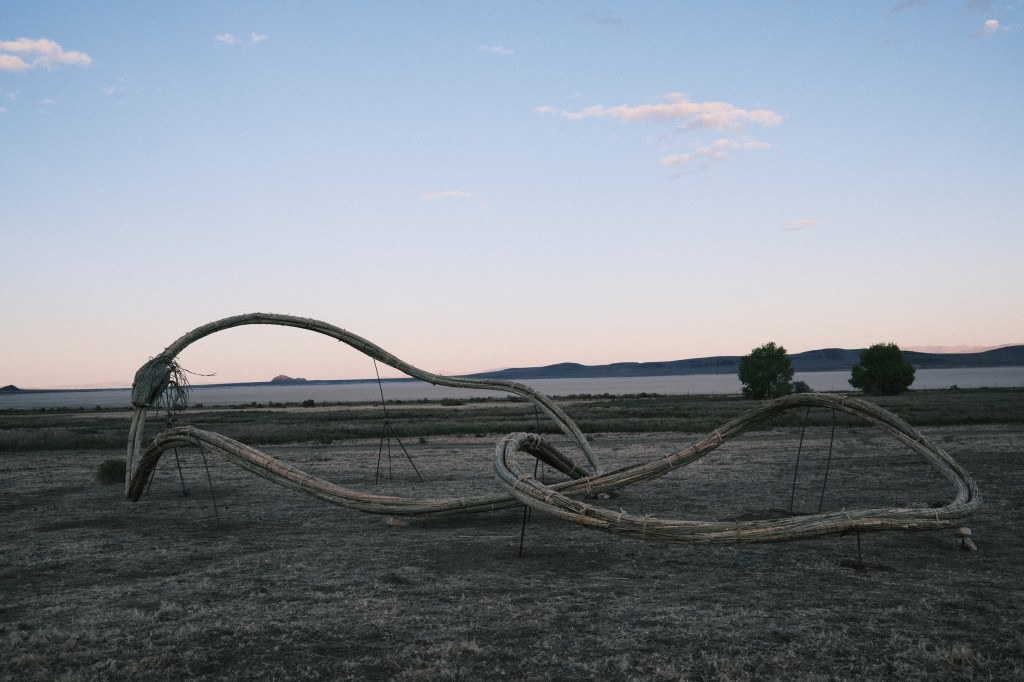
After the Burn, our friends came to help us. We sat together in a weaving circle, and I felt blessed to have this community, a group of strong sisters. Other artists came as well to install their pieces at Fly Ranch, and as the landscape of art grew more multifaceted and varied around us, so did our community. Each night, we cooked in earthenware pots on the fire and told each other stories of our lives and our dreams, where we had been and where we wanted to go. Ayeda came to us here, with the sound of wind hissing through rippling fields of native grasses, a serpent of this world. She encircles and holds us together, living off the abundance around us. It is said that if the balance is disturbed, she will turn inward and begin consuming her own tail, coil by coil, until the loop closes completely and the world she was holding falls into chaos. There was never anything beneath her but her own body, the delicate balance between the ephemerality of the moments we share and the communities we build, coiling cyclically, meeting infinitely. I hope that walking into Ayeda, you feel held, as we were held.


Leave a comment